
Ayurveda – Start from a Single Step
Updated: Jan 29
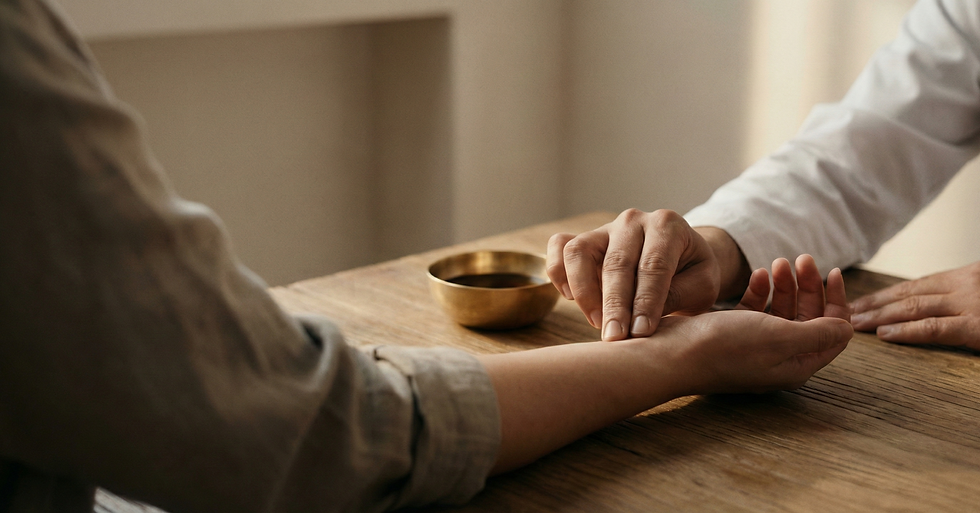
A beginner-friendly guide to holistic living
Many people believe Ayurveda requires drastic changes — strict diets, complex routines, or long treatments. In reality, Ayurveda begins with one small, conscious step. A single habit, when aligned with your body’s nature, can initiate meaningful change.
This blog explores how you can begin your Ayurvedic journey gently, practically, and sustainably.
What Is Ayurveda in Simple Terms?
Ayurveda is a traditional system of medicine that focuses on balance of body, mind, and digestion. Rather than treating only disease, it emphasizes daily habits, food choices, and awareness to maintain health.
You don’t need to “do everything Ayurvedic” at once. Ayurveda works best when adopted step by step.
Why Ayurveda Feels Overwhelming - and Why It Shouldn’t.
You may have heard that Ayurveda requires waking up before sunrise, giving up favorite foods, following strict routines, drinking bitter decoctions, or committing to long treatments. Some assume it is only for those who are deeply spiritual or already unwell. Others feel unsure whether Ayurveda will “work” for them at all.
This hesitation is understandable — but it is also based on a misunderstanding.
In its true form, Ayurveda is not about abandoning your life and adopting a new one. It is about learning to live in better alignment with your body, digestion, mind, and natural rhythms. And that alignment can begin with a single, conscious step.
What Ayurveda Really Is?
Ayurveda is one of the world’s oldest systems of medicine, but its relevance today lies in how deeply practical it is.
At its core, Ayurveda is the science of:
Understanding your body constitution (Prakriti)
Recognizing imbalance (Vikruti) early
Supporting digestion (Agni)
Preventing disease before it fully manifests
Unlike symptom-focused approaches, Ayurveda asks different questions:
How is your digestion, not just your diagnosis?
How do you sleep, eat, think, and respond to stress?
What patterns repeat in your body over time?
Ayurveda does not treat diseases in isolation. It treats the person experiencing the disease.
Why “Starting Small” Is the Ayurvedic Way?
Modern culture glorifies extremes - 21-day challenges, overnight transformations. Ayurveda takes the opposite approach.
Ayurveda understands that:
The body resists sudden change
Digestion adapts slowly
The nervous system needs safety, not shock
In classical Ayurvedic thought, small daily practices (Dinacharya) have more power than occasional intensive efforts.
Starting small allows:
Better consistency
Less mental resistance
Greater long-term success
You are far more likely to heal by changing one habit you can sustain, than ten habits you abandon in a week.
The First Ayurvedic Step: Observation Before Action
Before food charts, herbs, or therapies, Ayurveda begins with observation.
This step requires no money, no equipment, and no diagnosis.
Ask yourself honestly:
Do I feel hungry at regular times?
Do I feel heavy, bloated, or tired after meals?
Is my sleep refreshing or disturbed?
Do I wake up rested or exhausted?
Do I feel calm, anxious, dull, or overstimulated most days?
This self-observation is the beginning of understanding:
Agni (digestive strength)
Dosha tendencies
Early imbalance
Ayurveda values this awareness deeply - because without it, even the best treatment may fail.


When Is It Time to Seek Ayurvedic Consultation?
While self-awareness is powerful, guidance becomes essential when:
Symptoms persist despite efforts
Multiple systems are involved
You feel confused by conflicting advice
You want clarity, not trial-and-error
An Ayurvedic consultation helps:
Understand your Prakriti
Identify root imbalance
Decide what not to do (equally important)
Ayurveda Is a Journey - Not a Prescription
Ayurveda does not promise overnight results. It promises deep understanding and steady progress.
The body heals when it feels supported, not forced.
Morning Routine Awareness
Wake up at a consistent time
Avoid checking your phone immediately
Allow a few minutes of stillness
Hydration the Ayurvedic Way
Prefer warm or room-temperature water
Sip slowly, don’t gulp
Respect Natural Hunger
Avoid eating without hunger
Avoid suppressing hunger
Seasonal Awareness
Adjust food and activity with weather changes
Begin your Ayurvedic journey with guidance that understands your body, digestion, and daily life.
Comments